5 Common Flat Roof Problems and How to Spot Them Early
Flat roofs require specific maintenance in Cambridge’s challenging climate. At Flat Roofer Cambridge, our technicians encounter these five problems repeatedly during inspections across Cambridge, from Chesterton to Trumpington. Early detection prevents minor issues from becoming major structural concerns.
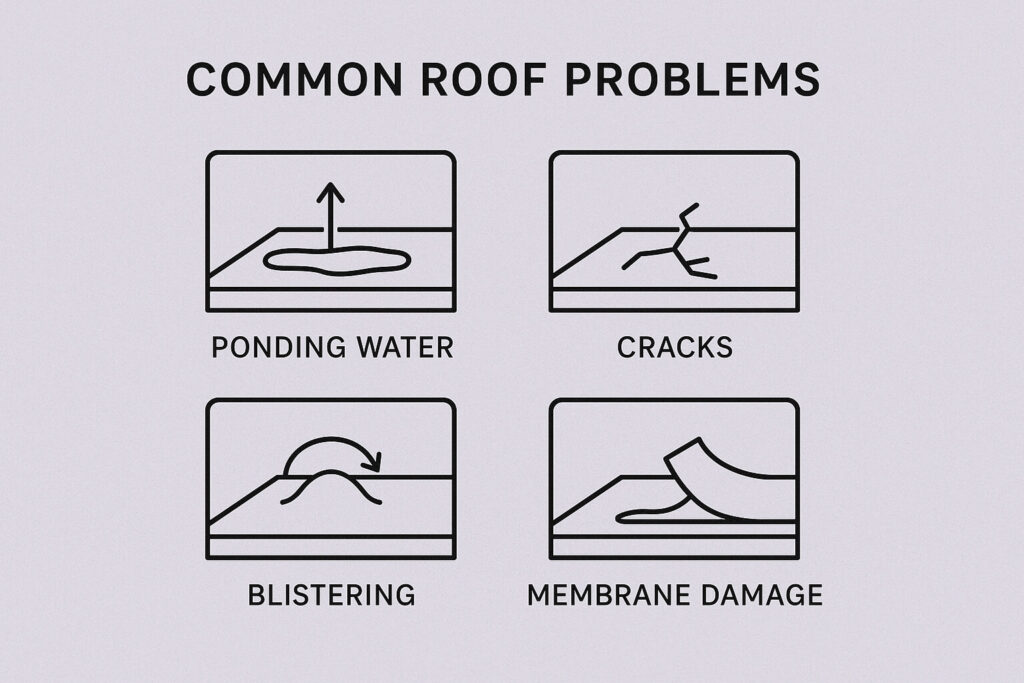
1. Ponding Water: The Silent Roof Killer
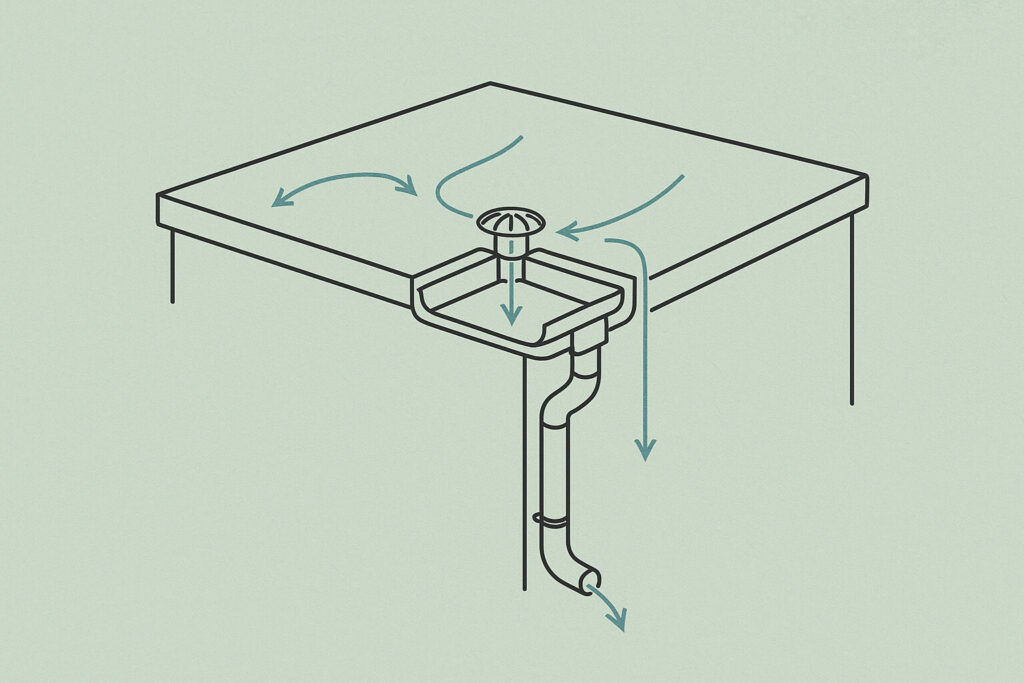
Standing water remaining more than 48 hours after rainfall indicates inadequate drainage—a critical issue in Cambridge, where much of the year’s rain arrives in short, heavy downpours. This saturation stresses the membrane, degrades insulation, and adds significant weight to the roof structure.
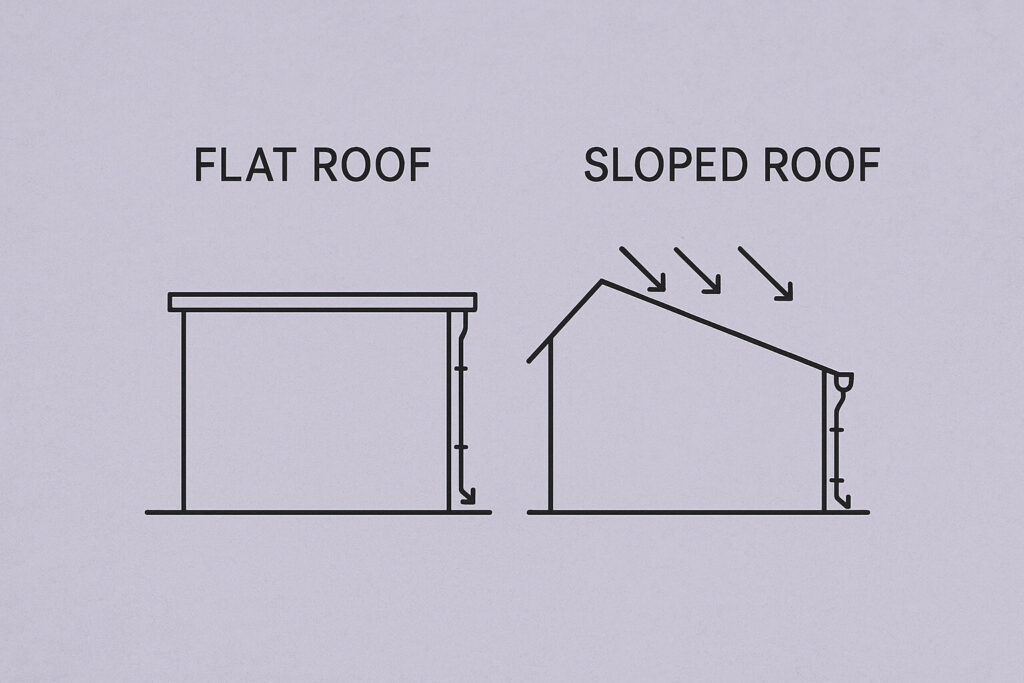
Technical insight: Properly installed flat roofs should have a minimum 1:80 fall (1.4° slope). Use a spirit level to check drainage slope during dry conditions.
Cambridge-specific action: Properties on the low-lying ground towards the fens, such as Chesterton and Fen Ditton, require more frequent drainage checks. Install tapered insulation if ponding persists despite regular cleaning of drainage systems.
2. Membrane Degradation: Cracks and Blisters
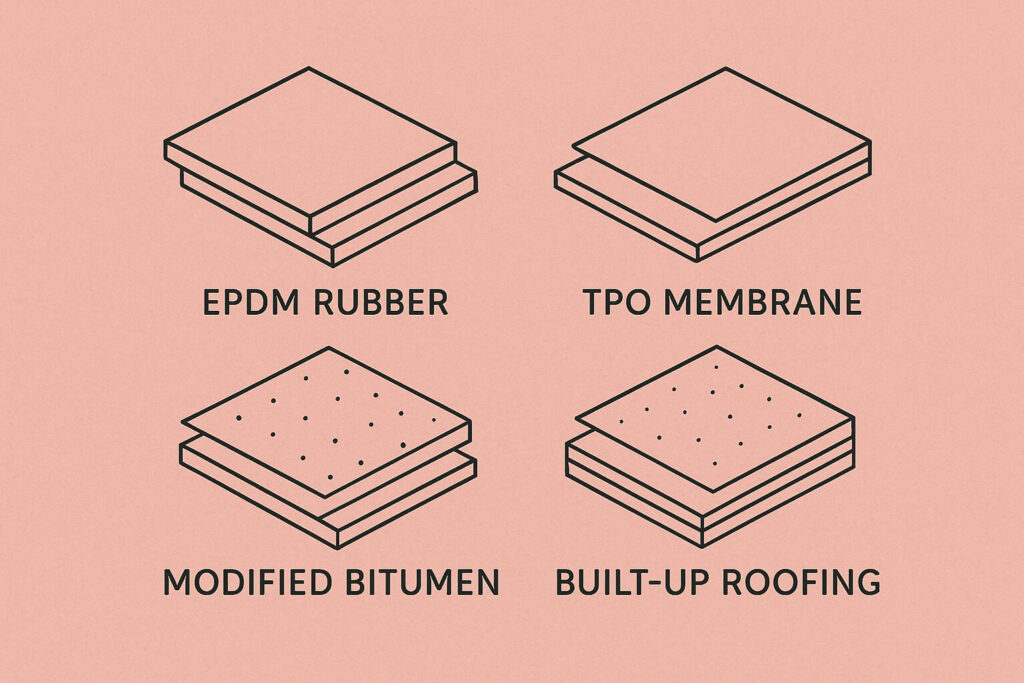
UV exposure and thermal movement cause cracks and blisters in EPDM, felt, or TPO membranes. South-facing roofs in Cambridge suffer most from UV degradation, while temperature fluctuations between our hard winter frosts and hot summers accelerate material fatigue.
Identification guide:
- Blisters: Raised areas indicating trapped moisture expanding with heat
- Crazing: Fine surface cracks resembling a spider’s web
- Chalking: Powdery residue indicating UV degradation
- Split seams: Separation at membrane joints, particularly vulnerable in older systems
Immediate action: Small cracks can be sealed with compatible patching compound, but widespread degradation requires professional assessment.
3. Flashing Failures: The Leak Source You Can’t See
85% of flat roof leaks originate at flashing points—where the roof meets walls, chimneys, vents, and skylights. In Cambridge’s climate of hot summers and cold winters, thermal movement causes separation in expansion joints, while wind-driven rain off the open fenland finds any weakness at metal flashings.
Critical flashing points to inspect:
- Parapet wall junctions (most common failure point)
- Pipe penetrations (especially vulnerable to movement)
- Edge metal details (prone to wind uplift in exposed areas)
- Expansion joints (essential for Cambridge’s temperature fluctuations)
Prevention tip: Use flexible sealants compatible with your roof membrane at all flashing points, and check these areas during bi-annual inspections.
4. Drainage System Blockages: The Autumn Challenge
Cambridge’s many mature street trees and gardens mean flat roof drains become clogged with leaves, moss, and debris—particularly problematic during autumn. Internal drains are especially vulnerable as blockages aren’t immediately visible from the roof surface.
Professional maintenance protocol:
- Remove drain grates and clear surface debris
- Use a trowel to scoop out accumulated material from the sump
- Insert a plumber’s snake to clear internal pipe blockages
- Flush with water to verify proper flow rate
- Install leaf guards in properties surrounded by trees
Cambridge-specific advice: During October and November, check drains weekly. Properties near the river meadows or in leafy areas like Newnham and Trumpington require more frequent attention.
5. Structural Deflection: The Hidden Danger
Sagging or noticeable dips indicate serious structural concerns—not merely cosmetic issues. In Cambridge’s older properties, this often results from:
- Water-saturated insulation losing structural integrity
- Long-term deflection of supporting beams
- Improper initial installation with inadequate support
- Foundation movement in areas with Cambridge’s clay soil
Urgent action required: Significant sagging represents a structural risk requiring immediate professional assessment. We’ve seen cases where ignored deflection led to partial roof collapse during heavy snowfall events.
Preventative Maintenance Schedule for Cambridge
Implement this seasonal routine to protect your flat roof:
| Season | Critical Maintenance Tasks |
|---|---|
| Spring | Inspect for winter damage, check all flashings, clean drains after winter debris buildup |
| Summer | Check for UV damage, inspect membrane for blisters, ensure proper drainage before autumn rains |
| Autumn | Weekly drain cleaning during leaf fall, inspect for wind damage, prepare for winter weather |
| Winter | Check after storms, monitor for ice damming (rare but possible), inspect interior for leaks |
Early detection saves significant repair costs. Regular professional inspections identify problems before they escalate into major structural issues. At Flat Roofer Cambridge, we provide comprehensive roof health assessments with detailed reporting—ensuring your property remains protected against Cambridge’s unpredictable weather.